Turning instructions into action
Understanding an instruction and being able to carry it out aren't the same thing, especially under pressure. That gap often isn't about intelligence. It comes down to thinking processes that are assumed, not taught directly.

We work on that gap in four stages

Build awareness

How someone's thinking actually works, and where it gets harder.

Practise the skills

Targeted activities that practise specific thinking processes.

Apply them for real
Used on actual tasks, not abstract drills.

Show what's changed
Clear evidence, for the person and whoever's supporting them.
The approach draws on established concepts in cognitive psychology and neuroscience, including neuroplasticity, metacognition and cognitive control.
What this looks like in practice
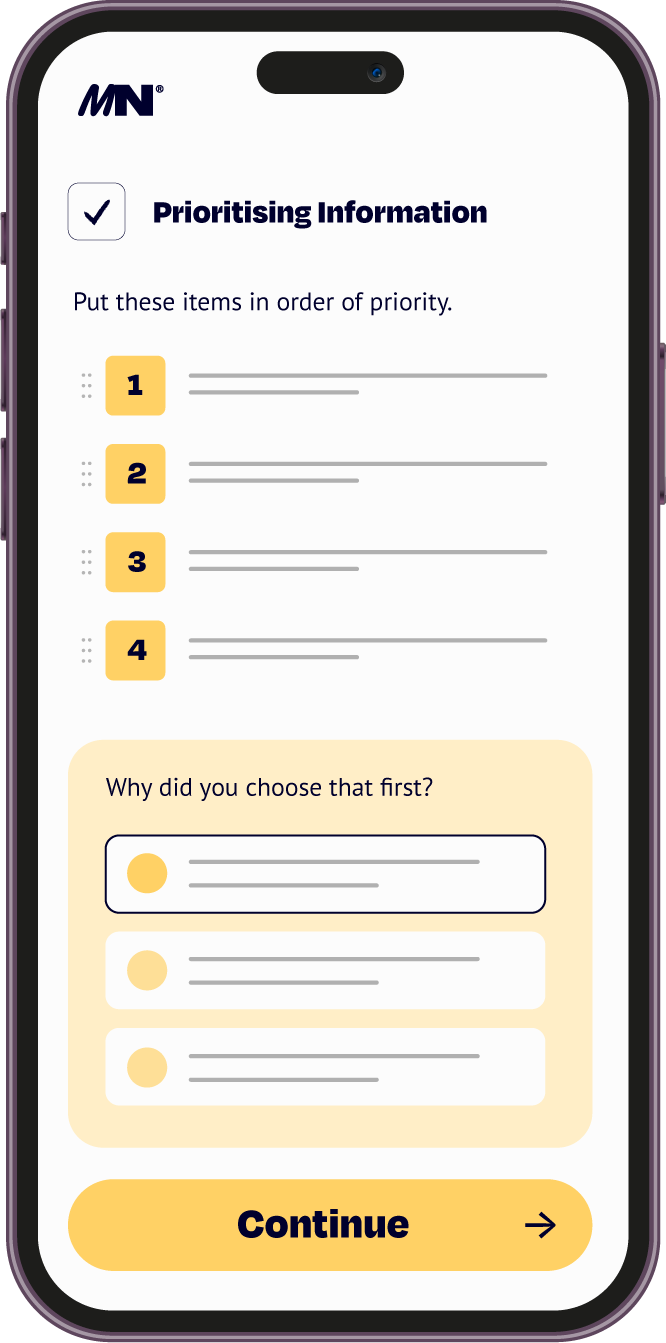
Practical Thinking Tools
Structured exercises for the demands that come up again and again: prioritising information, following multi-step instructions, and adjusting when a plan isn't working.